Trinity Freistadt Historical Society · Est. 1965

Visit the Historic Site

Thirteen historic buildings on the grounds where Wisconsin's first German settlement took root in 1839.

Tours & open days

The historic village opens for tours during the society's events — the Freistadt 4th of July and the Ice Cream Social are the two big open days each year, with demonstrators in the buildings and the blacksmith at the forge. Open-house afternoons are announced on our Facebook page.

Private and group tours can be arranged at other times — school groups, clubs, and family reunions are all welcome, and the picnic shelter can be booked for gatherings. Call (262) 242-0724 or send us a message to arrange a visit.

Gift items and our books and DVDs about historic Freistadt and the Pomeranian immigration are available at events or by mail order. The society also offers limited archival research — send us a message with your genealogy or research question.

Regular hours: pending confirmation from the society — check Facebook or call ahead for now. Admission is by donation.

The buildings

The site preserves thirteen historic buildings. More photos are coming as the society supplies them.

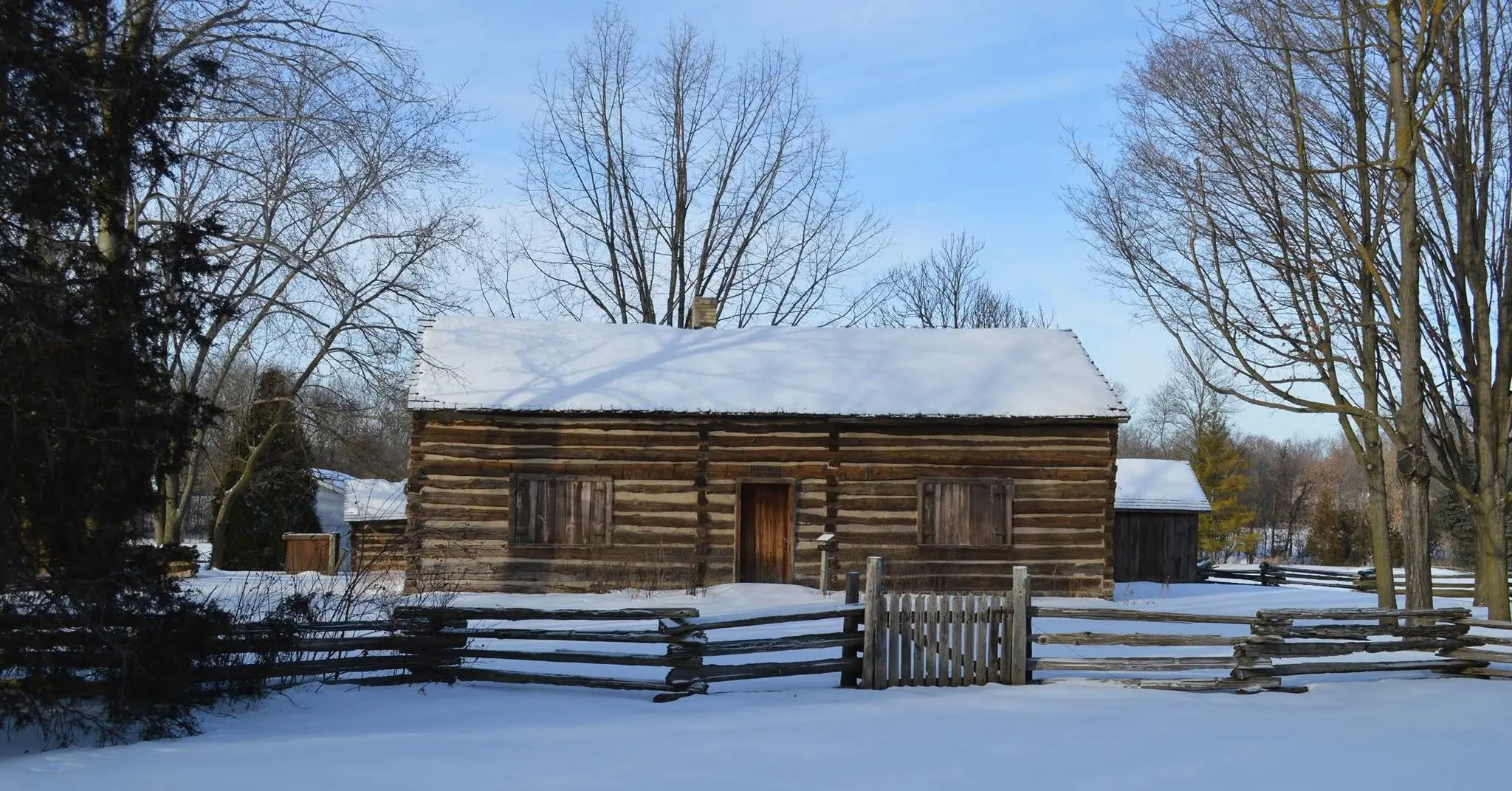
The historic log cabin in winter behind its split-rail fence, snow covering the ground

The Log Cabin

The heart of the site, standing where the original log cabin church and school were built in 1840 — the spot where the settlers celebrated their first Easter in their new home. Step inside during events to see how a Pomeranian pioneer family lived, including the open hearth where meals were cooked.

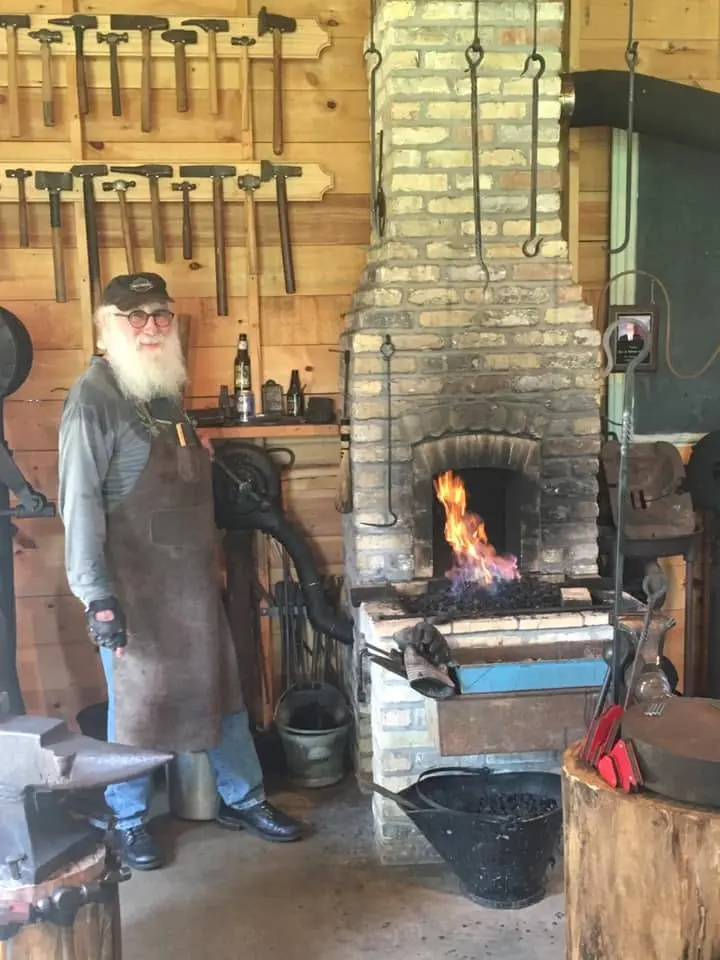
The blacksmith in his leather apron beside the brick forge, flames rising from the firepot, with rows of hammers and tongs hung on the wall

The Blacksmith Shop

A working forge — on event days the blacksmith fires it up and demonstrates the trade that kept a frontier settlement running. Fittingly, one of the original 1839 settlers, C. Knuth, was the community's blacksmith.

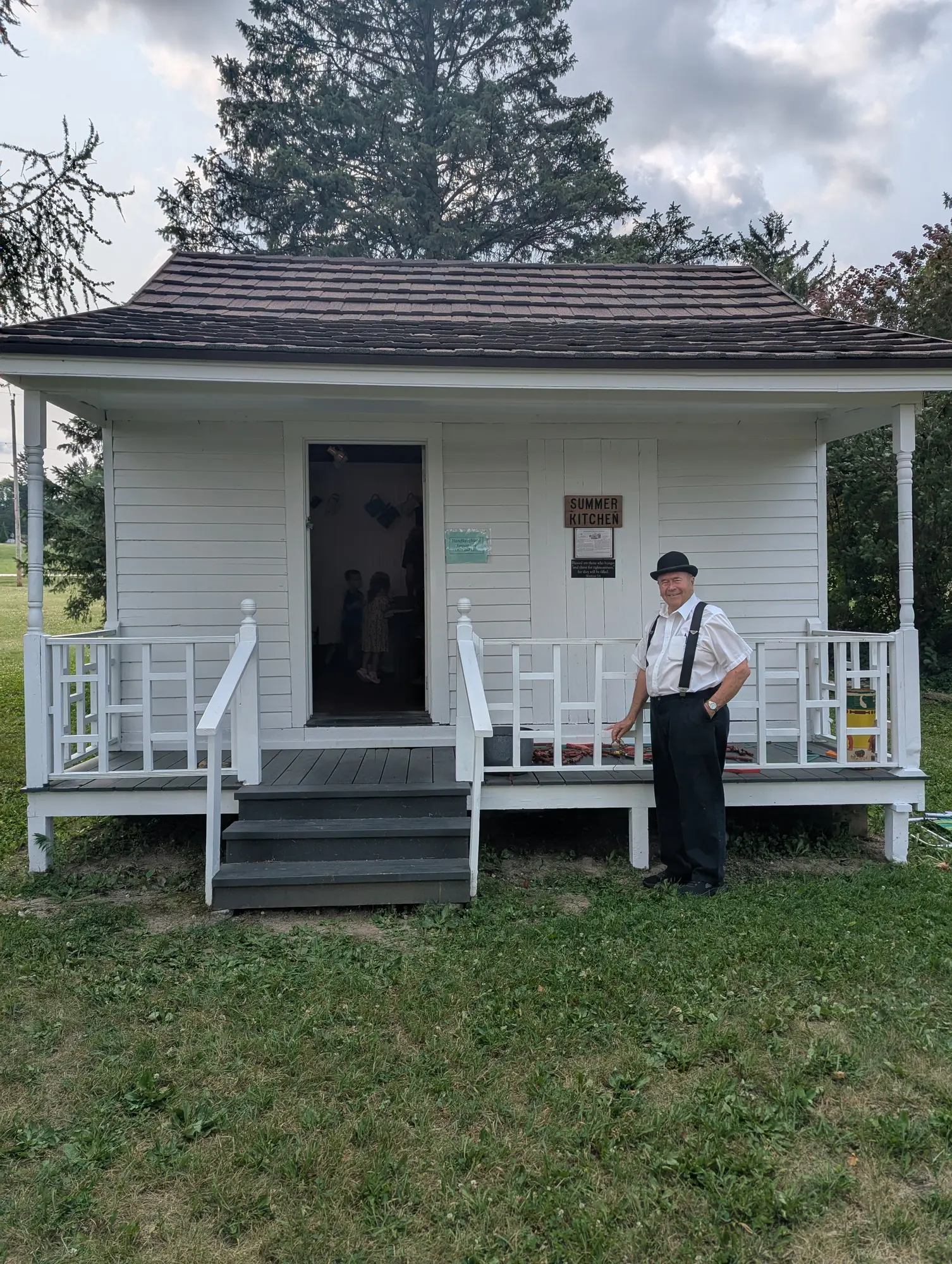
The white clapboard Summer Kitchen with its front porch and "Summer Kitchen" sign, a docent in a period bowler hat and suspenders standing at the porch rail

The Summer Kitchen

Displays the food-preparation methods of the past — the separate kitchen where cooking moved in the hot months to keep the house cool and the fire risk outside.

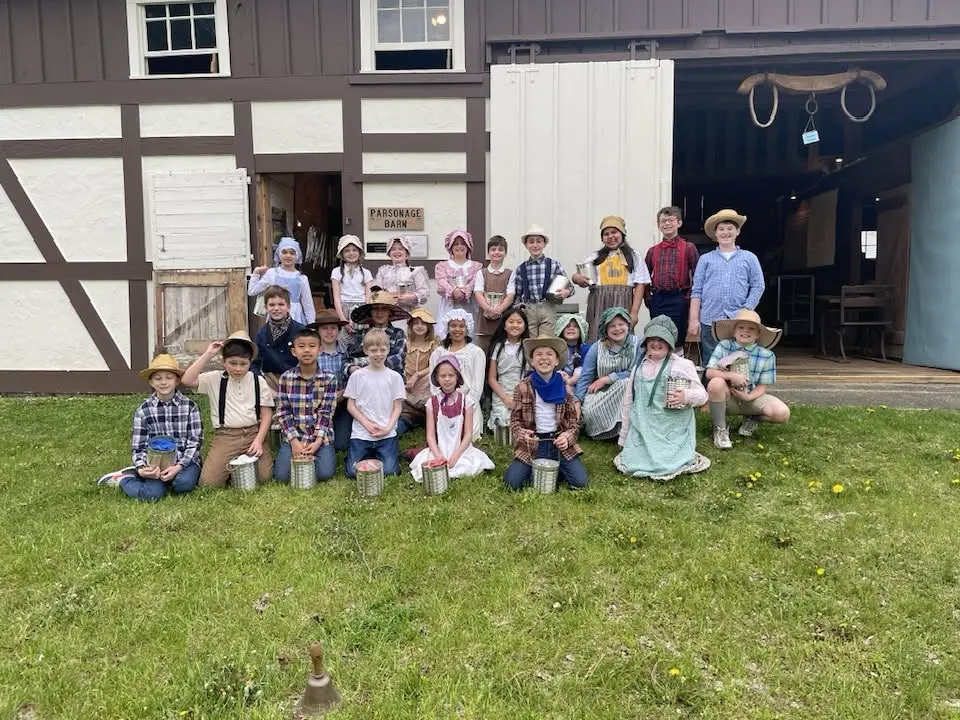
A school group in period dress gathered on the lawn in front of the half-timbered Parsonage Barn, its big doors open behind them

The Barn

The half-timbered Parsonage Barn holds a loom and changing displays. It’s a regular stop for school groups spending a day on the grounds in period dress.

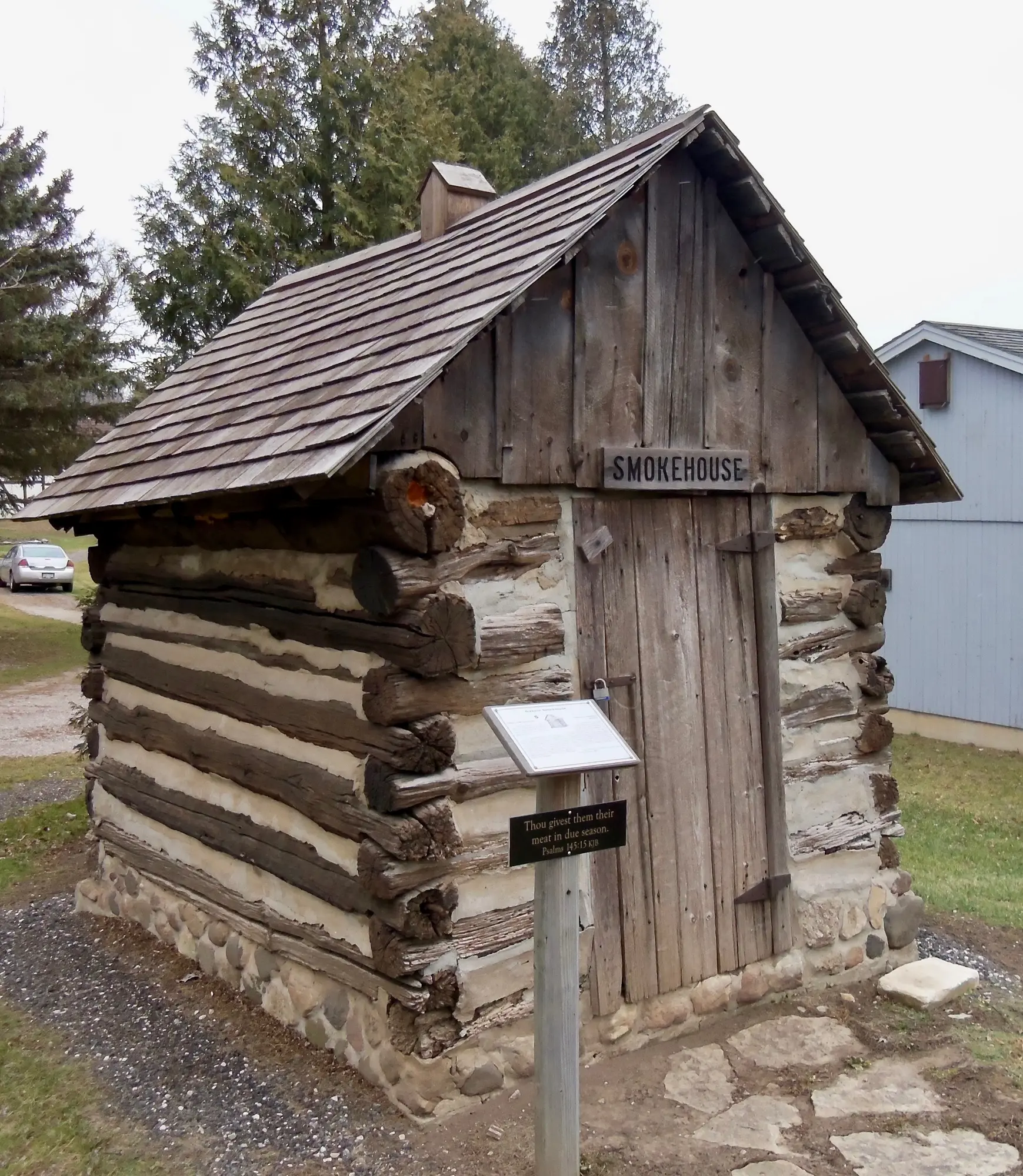
The little log Smokehouse under its cedar-shingled roof and rooftop smoke vent, an interpretive sign on a post by the plank door

The Smokehouse

Where meats were cured for the settler table.

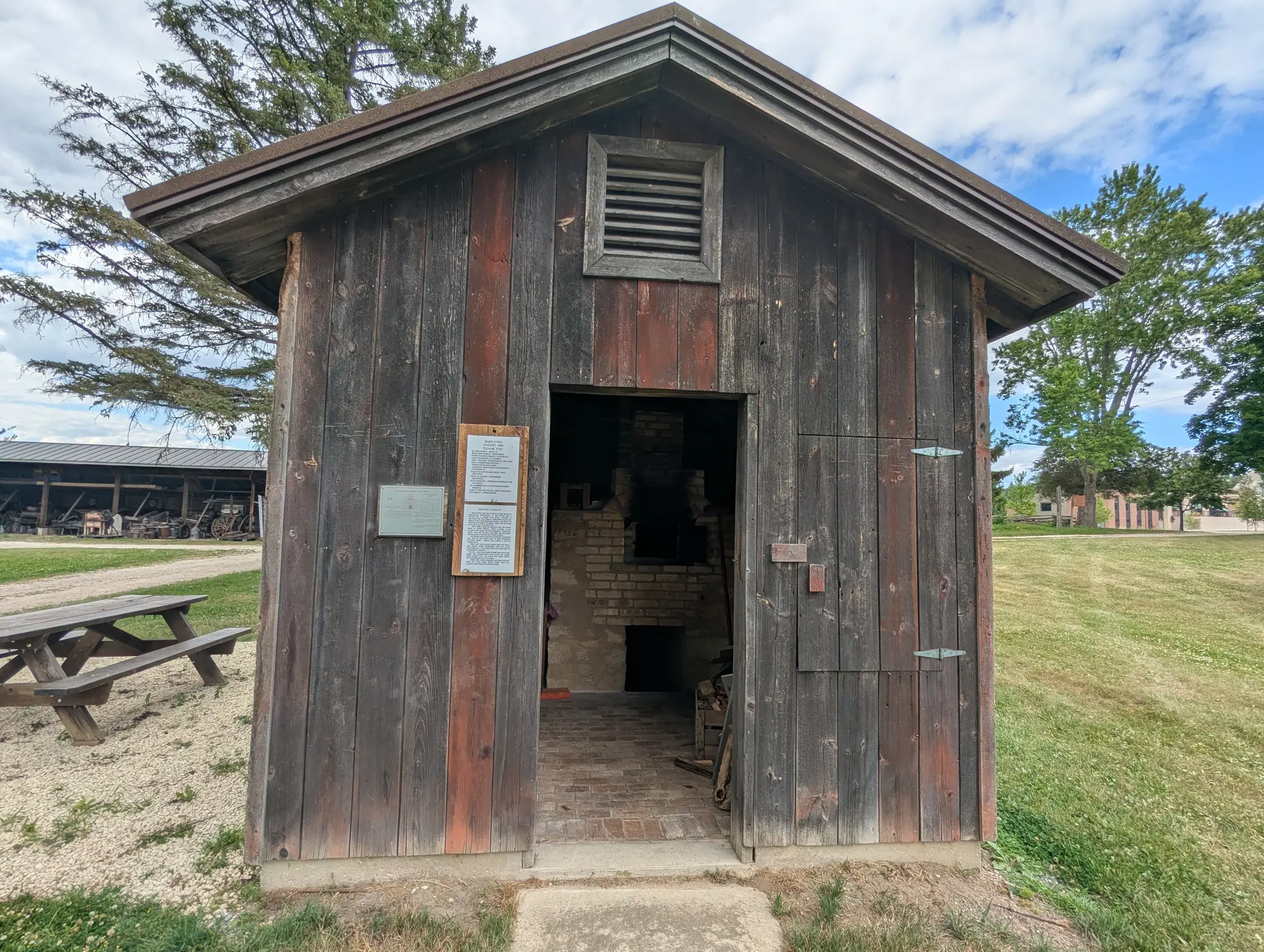
The weathered wooden Bake Oven building with its door open, the brick bake oven visible inside, a picnic table on the gravel beside it

The Bake Oven

Can bake up to 40 loaves of bread at one time — the source of the fresh bread served at the Fourth of July celebration.

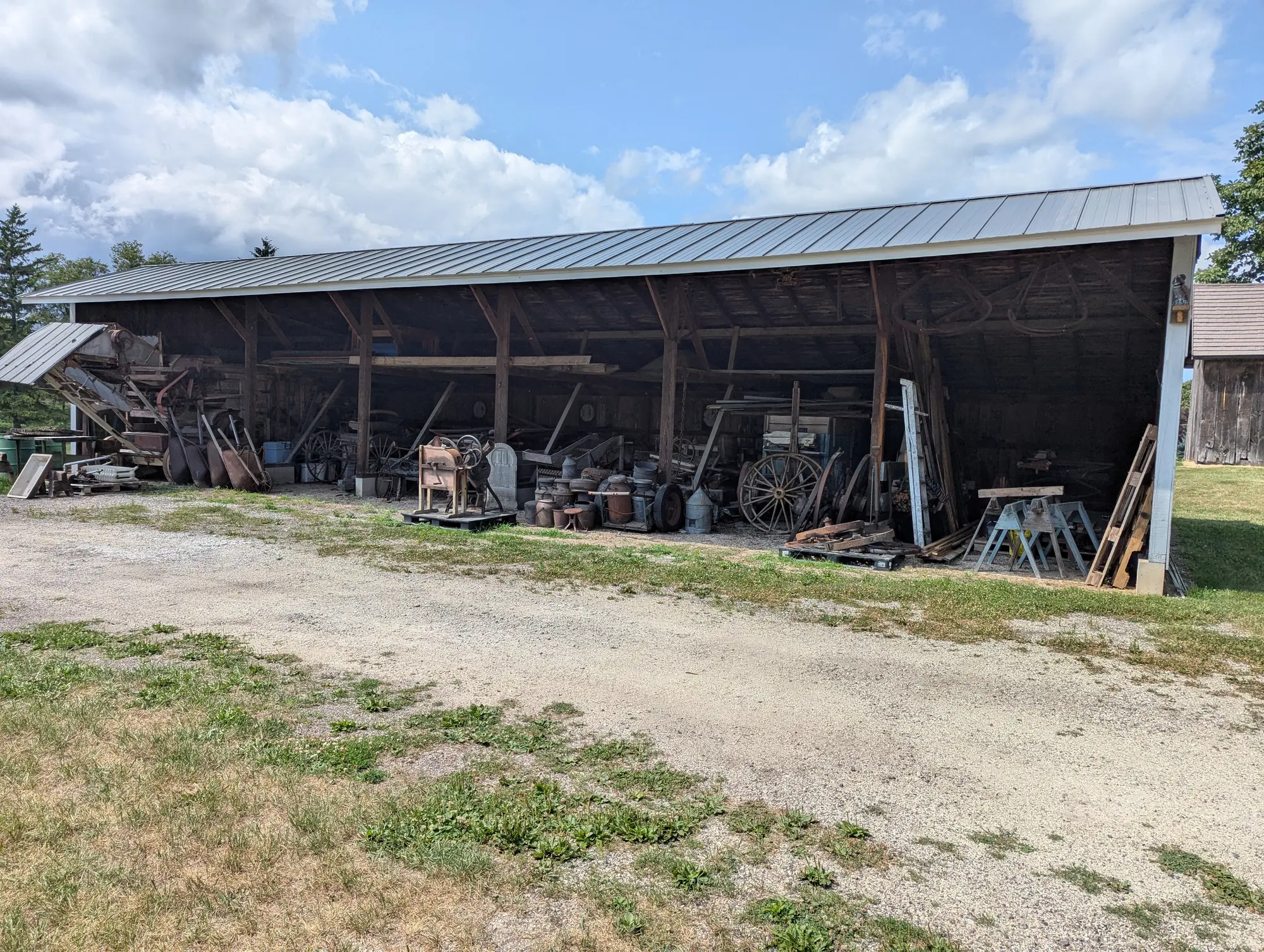
The long open-sided horse shed, its bays now filled with antique farm implements, wagon wheels, and milk cans

The Horse Sheds

Replicas of the sheds that stabled horses while their owners attended church services long ago.

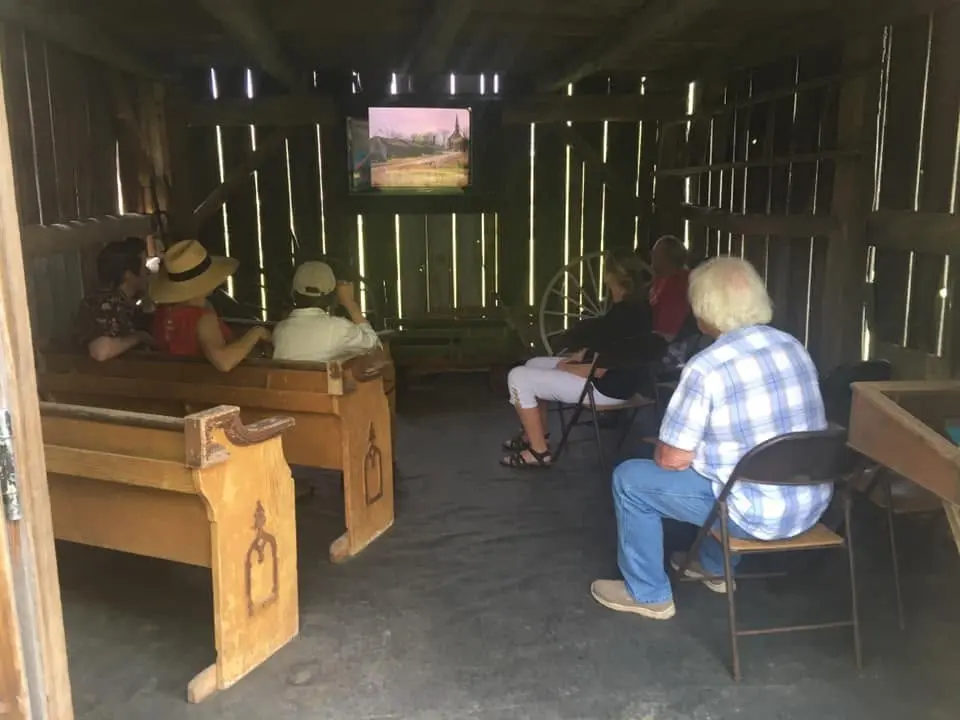
Visitors seated on wooden pews inside the rustic board-walled shed, watching a film about the historic site on a screen, a wagon wheel leaning against the back wall

The Theater Shed

Tucked behind the Log Cabin, this shed now hosts a theater.

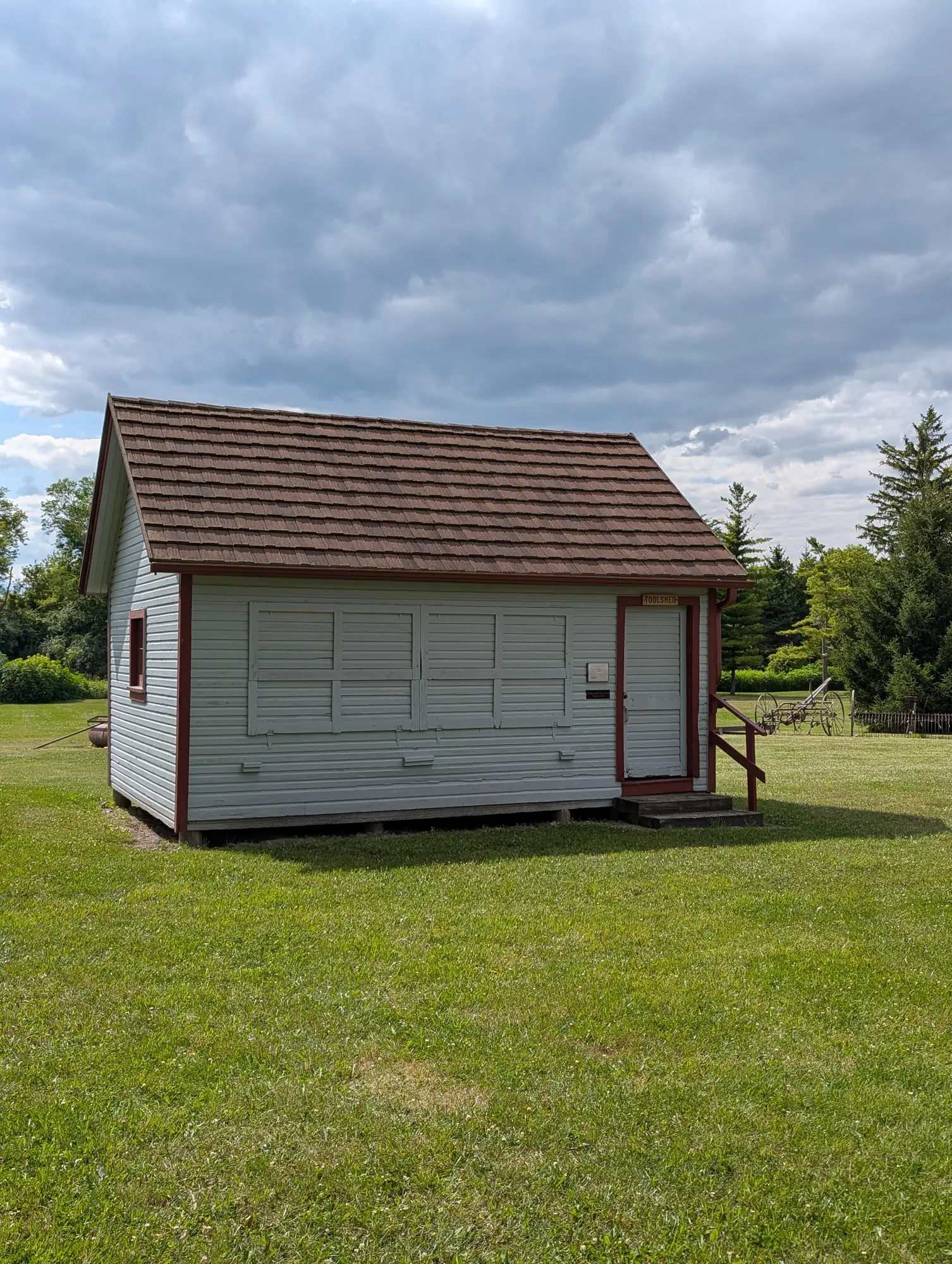
The white clapboard Tool Shed with red trim and a "Toolshed" sign over the door, an antique hay rake on the lawn behind it

The Tool Shed

Profile coming soon.

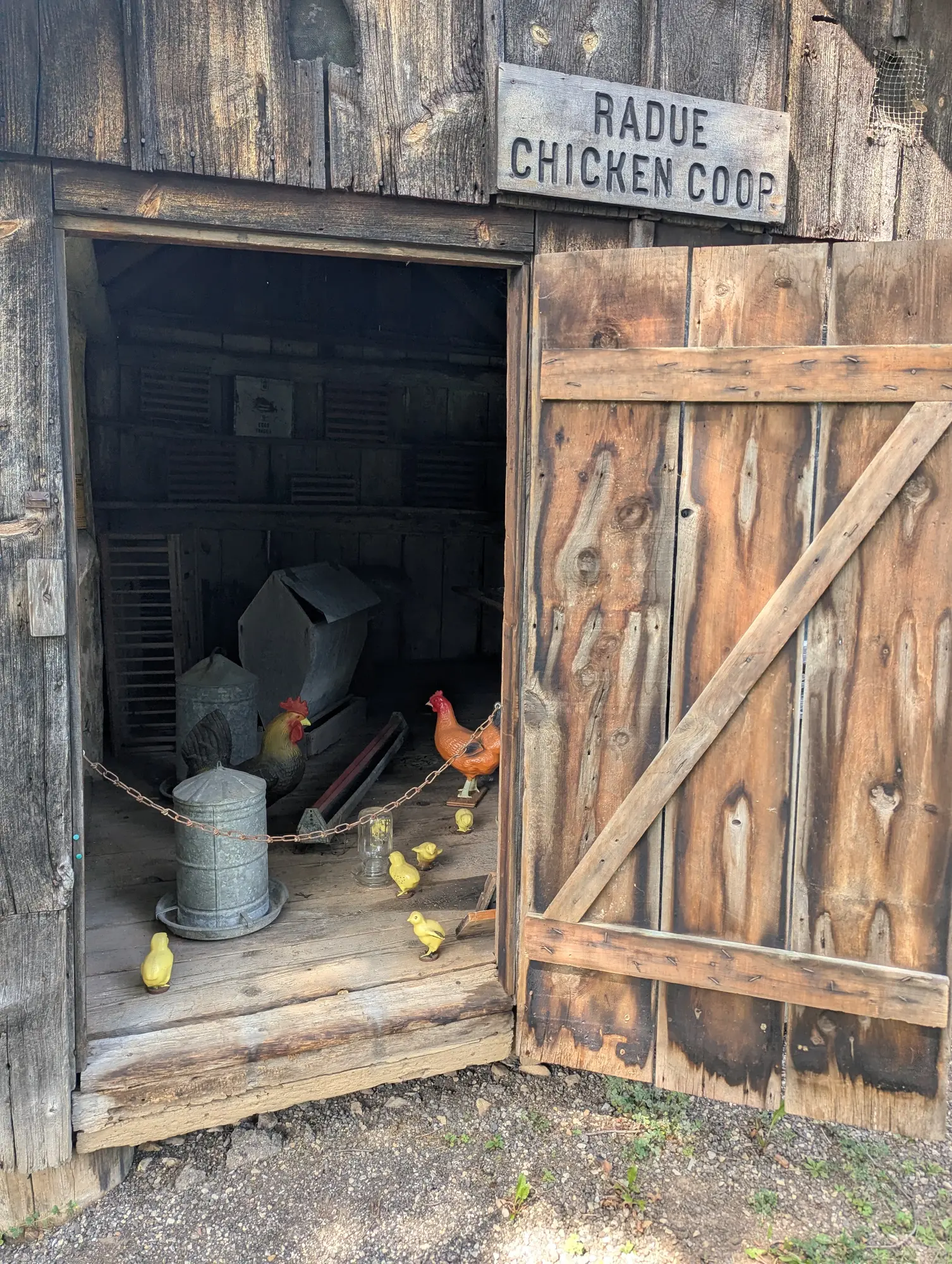
The open door of the Radue Chicken Coop, a rooster, hen, and yellow chicks gathered around galvanized feeders inside

The Chicken Coop

No one home but the chickens.

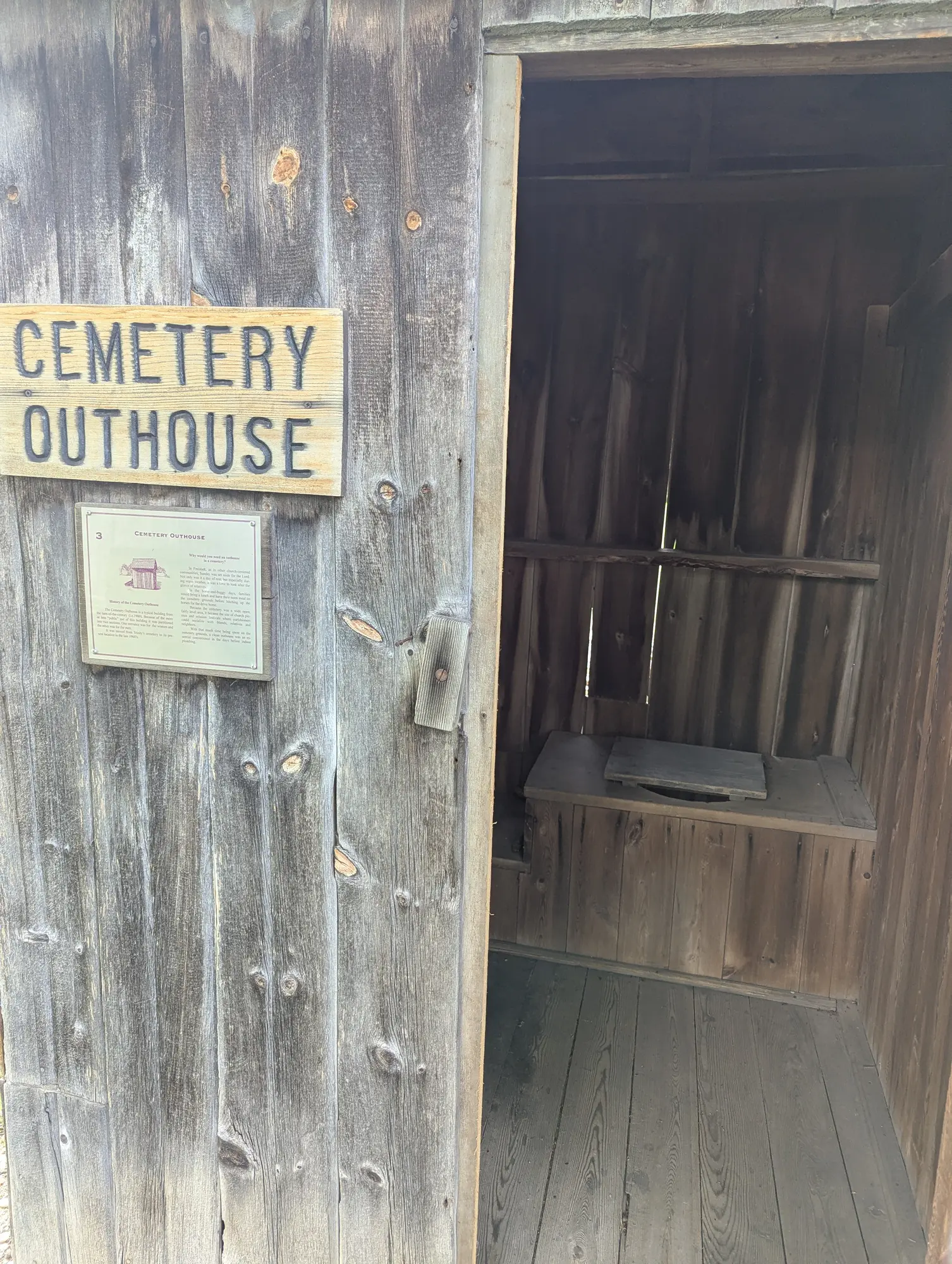
The Cemetery Outhouse with its carved sign and history plaque, the door open on the wooden bench seat inside

The Outhouse

A typical turn-of-the-century outhouse, partitioned into two sections — one entrance for the women, the other for the men. It served Trinity's cemetery before being moved to the historic site in the late 1960s.

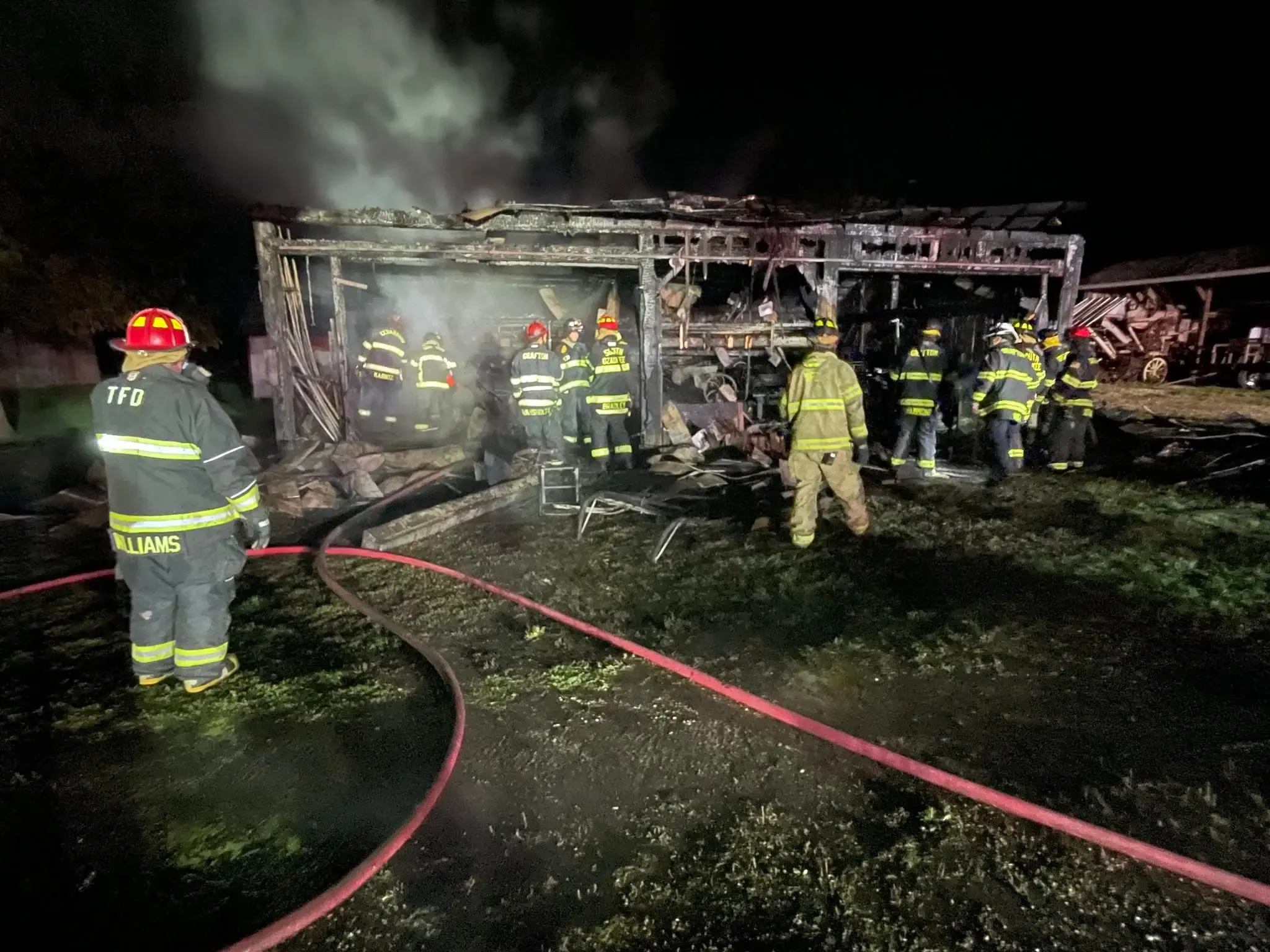
Firefighters from several departments working through the charred frame of the Mueller Shed in the dark, hose lines crossing the wet grass and smoke still rising from the roofline

The Mueller Shed

An 1870s farm shed that displayed wagons, a buggy, a restored sleigh, and the society's changing yearly exhibit — until it was lost to a fire in August 2023. The society is rebuilding it within its surviving timber frame. Read the shed's story .

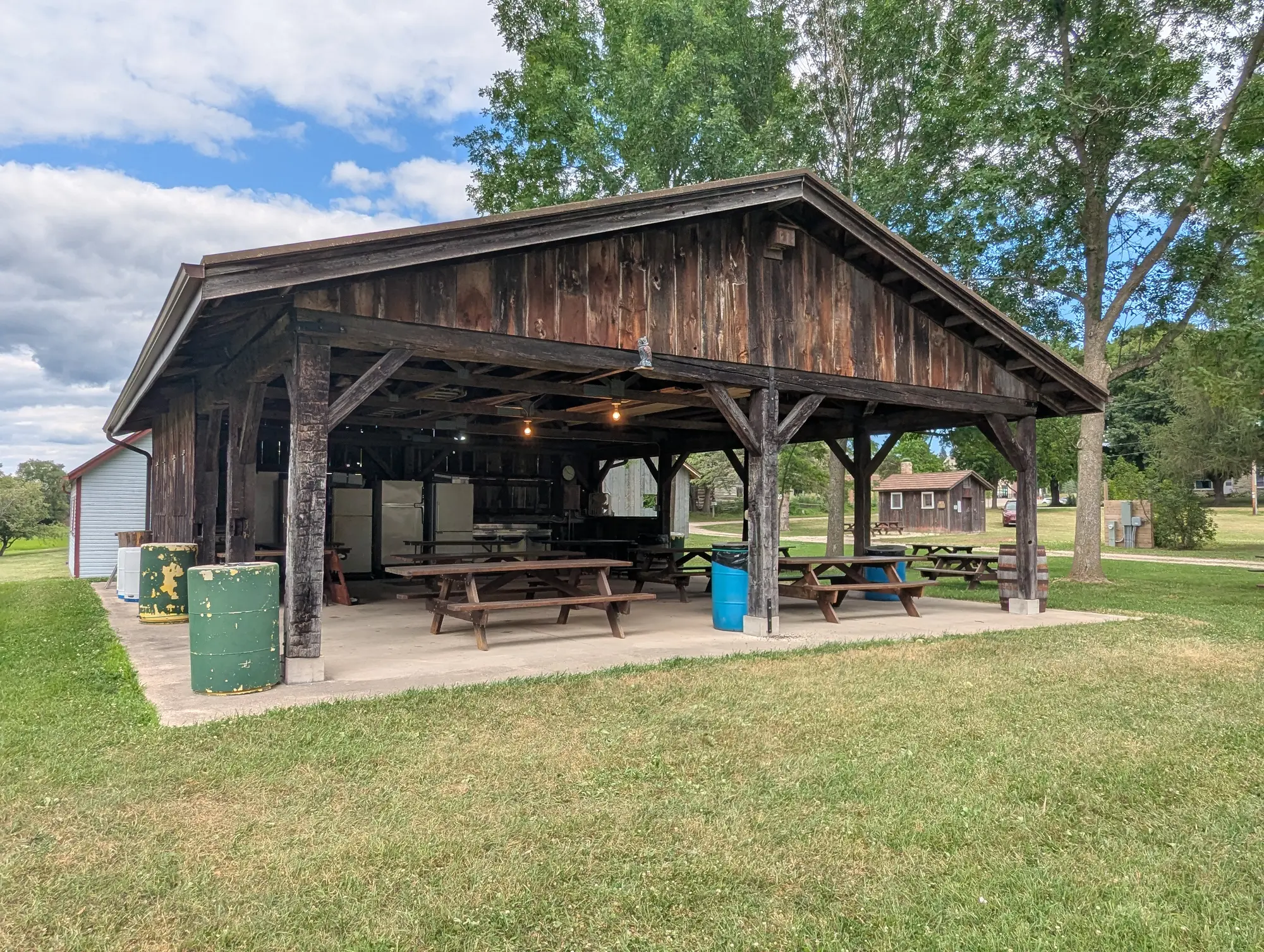
The timber-framed open picnic shelter with rows of picnic tables and kitchen equipment under its barnwood gable, big trees overhead

The Picnic Shelter

Available to rent for family gatherings, reunions, and group outings.

Directions & addresses

🚗 Visiting? Come here:

Trinity-Freistadt Historical Site
Open in Google Maps: 11856 N. Church Place
Mequon, WI 53097

The historic grounds sit southwest of Trinity Lutheran Church, near the corner of Freistadt and Granville Roads.

Open in Google Maps

✉️ Mailing checks or orders? Use this:

Trinity Freistadt Historical Society
10729 W. Freistadt Rd.
Mequon, WI 53097

This is the church's address — use it for donations, book orders, and all correspondence, not for GPS directions to the historic buildings.

Frequently asked questions

Where is the Trinity-Freistadt Historical Site?
The historic site is at 11856 N. Church Place, Mequon, WI 53097 — on the grounds of Trinity Lutheran Church of Freistadt, near the corner of Freistadt and Granville Roads, about 16 miles northwest of downtown Milwaukee. For mail, donations, and book orders, use the society’s mailing address instead: 10729 W. Freistadt Rd., Mequon, WI 53097.
When is the historic site open?
The historic village opens for tours during society events — the Freistadt 4th of July and the Ice Cream Social (third Sunday in August) are the two big open days each year — plus occasional open-house afternoons announced on the society’s Facebook page. Private and group tours can be arranged year-round by calling (262) 242-0724 or sending a message through the contact form on the About page.
How much does it cost to visit?
Admission to the historic site is by donation. Donations support the upkeep of the thirteen historic buildings and the society’s Exhibition Barn building fund.
What is there to see at the site?
Thirteen historic buildings preserving Wisconsin’s first German settlement (founded 1839), including a settler-era log cabin, a working blacksmith shop with live demonstrations on event days, a summer kitchen, a barn, and gardens. The 1884 Trinity church — the oldest Lutheran congregation in Wisconsin, still worshiping on the land purchased in 1839 — stands next to the grounds.
Can groups book a tour or the picnic shelter?
Yes. School groups, clubs, and family reunions are welcome, and the picnic shelter on the grounds can be reserved for gatherings. Call (262) 242-0724 or send a message through the contact form on the About page to arrange it.
The timber-framed open picnic shelter with rows of picnic tables and kitchen equipment under its barnwood gable, big trees overhead

Book the picnic shelter

The picnic shelter on the historical grounds can be reserved for family reunions and gatherings. Contact the society at (262) 242-0724 or through our contact form.